The Demand for Hope Is Inelastic
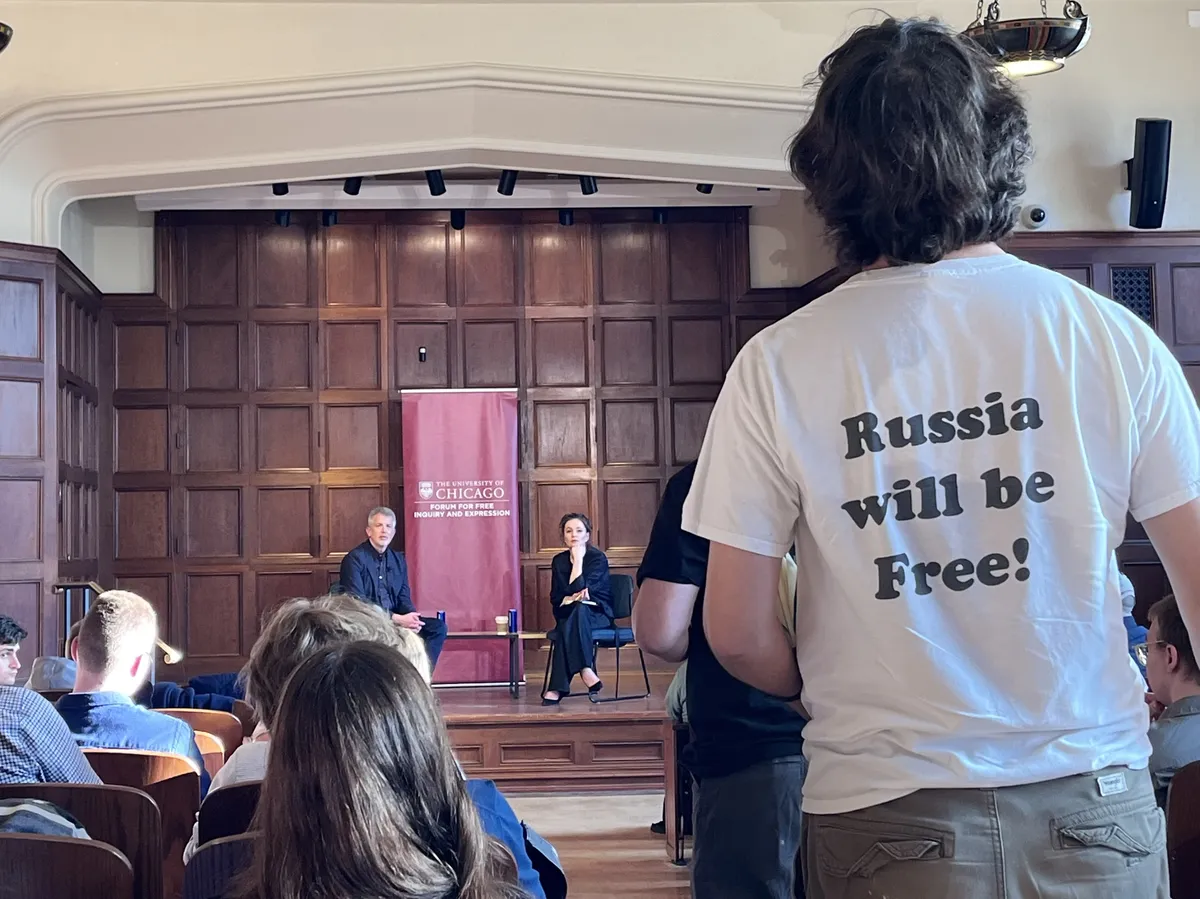
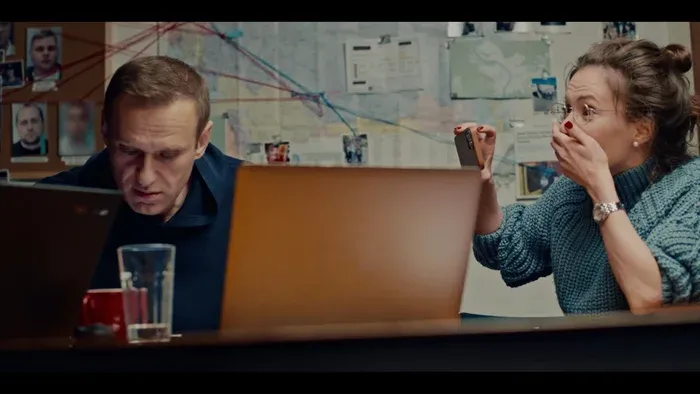
Wednesday was a special day. At an event organized by Chicago PhD student Alena Gorbuntsova and the Forum for Free Inquiry and Expression,1 I sat in conversation for 90 minutes with Maria Pevchikh, chief investigator of the organization founded by Alexei Navalny in 2011. In its fifteen years of existence, the Anti-Corruption Foundation (FBK) has exposed the deep corruption that lies at the heart of Vladimir Putin's regime and uncovered the inner workings of Russia's security state. Those who have seen the Oscar-winning documentary Navalny will remember Maria's expression when one of Navalny's poisoners admits to his role in the plot. She is a monumental figure in the resistance to a monstrous tyranny.
Some thoughts:
Maria Pevchikh is a normal and decent person. So, in my limited experience, is Yulia Navalnaya. This is not to discount their strength, which is enormous, but to emphasize the contrast with the money-grubbing and immoral actors who occupy the Kremlin.
When Putin murdered Alexei Navalny, I wrote:
Russia does not lack courageous people. But for now, and after today, it lacks a person who can channel that courage into a movement for what Navalny never stopped to call the "beautiful Russia of the future." Someday, another generational talent will appear, and perhaps Russians will then realize the future that could have been. Until then, there will only be despair.
Despair there is, but people long for hope. Years from now, what I will remember of this evening is not being on the stage with Maria but watching her with the crowd that waited outside. Russians had driven, even flown, for hours to see her, to have their photo taken with her, to touch her. She represents the courage that people know they have and want to be channeled. That hope did not die when Navalny was killed.
Yet what can one person do, especially from abroad? Is protest against the regime effective or simply performative? I asked Maria that question. She answered by way of example. Recently, the FBK released a video exposé of the hidden wealth of Nikolai Kolesov, the CEO of Russian Helicopters. Spanish authorities froze some of Kolesov's real estate in mid-2025, but street protests by Russian expatriates created pressure to do more. Two weeks ago, police raided two villas on Mallorca, discovering cash, Rolex watches, luxury automobiles...all paid for with money stolen from Russian taxpayers. One can do more than hope, in other words. One can act.
What keeps you going, someone asked Maria. Anger, in part. Anger at the people who have done this to her country. And also a hope that Alexei Navalny will not have died in vain. For dictators, this is the risk in creating a martyr: people feel a need to justify the sacrifice.
More anger: An older member of the audience demanded to know how she and others could have let Alexei Navalny return to Russia after his poisoning. How could you let him go, he shouted. You must have known what would happen! And yet, she said, they did not. Navalny said he would go back to Russia from the moment he emerged from his coma—they probably could not have stopped him if they had tried—but they also had no idea what would happen. They hoped, Navalny hoped...And because they did, this man was saying, his hope was lost.
Vladimir Putin's invasion of Ukraine has generated anger of a different sort. I know many Ukrainians who are angry with everyday Russians that they allowed Putin to accumulate so much power and that they have not overthrown his regime. We had two successful revolutions, they say. Where is yours?
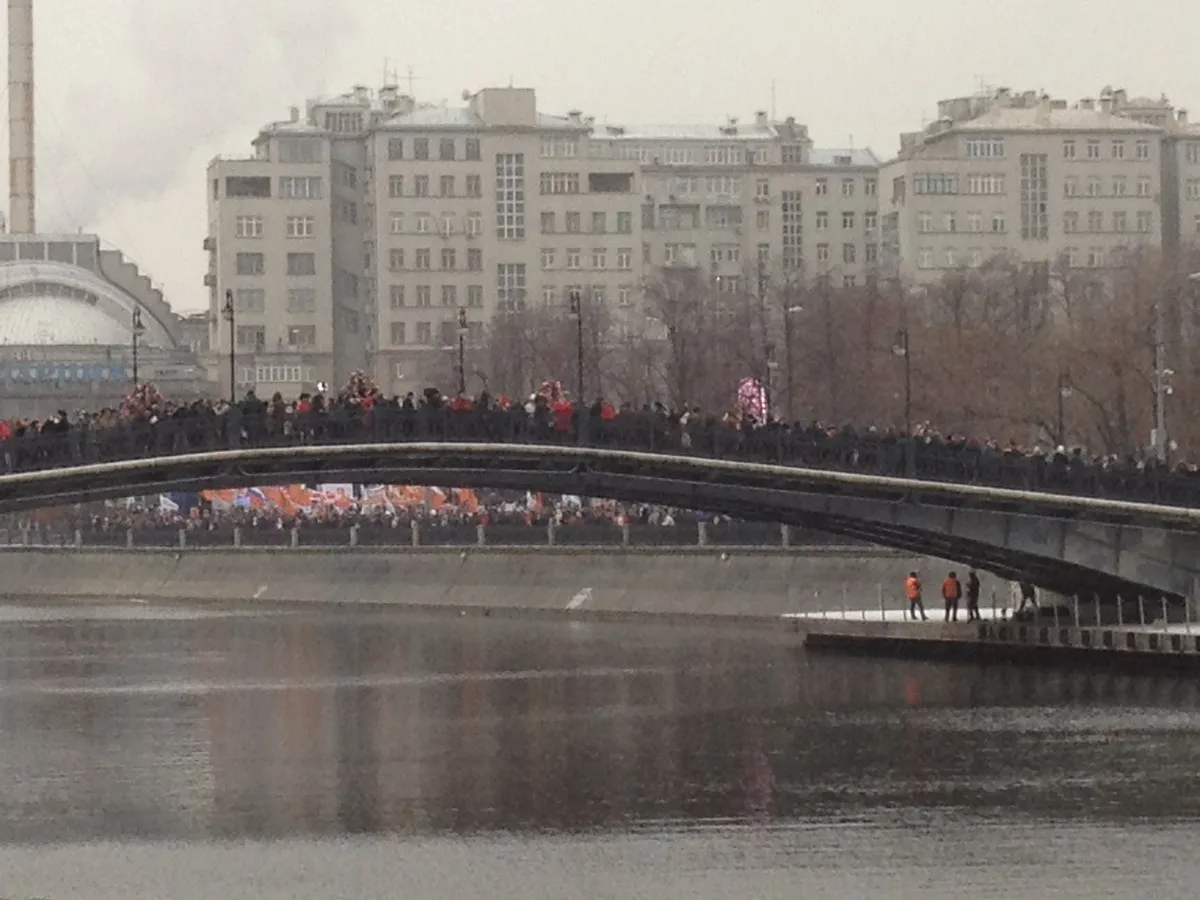
I understand the anger. I know many Russians who would agree. And yet I don't fully share the sentiment. I was on Bolotnaya Square in late 2011 when Russians protested against the country's stolen parliamentary elections. Many, many people turned out, not knowing what would happen. And yet it wasn't enough. At one point, it felt like it was tipping—I remember the night when one of Russia's top television anchors said he wouldn't go on the air if the protests were not covered—and then it slipped back. Why? Would a few more thousand protesters have made a difference? Were there so few splits among the elite that no amount of dissent could bring down the regime? I have no idea. Social scientists understand coordination games, but we don't have the tools to say when we will switch from one equilibrium to another. It's now out of never.
- I put this question to Maria. Fifteen years, 250 investigations, hundreds of millions of views, and yet Putin is still in power. Why? And she basically threw Timur Kuran (and Alexei Yurchak) back at me. Who knows when the regime breaks? We had no idea that the USSR could collapse, and then it did, spectacularly. Everything was forever, until it was no more. Maybe the 252nd investigation, or the 253rd, will be the straw that breaks the camel's back. We don't know, she said, but we have to keep trying, knowing that the end can come. We have to hope.
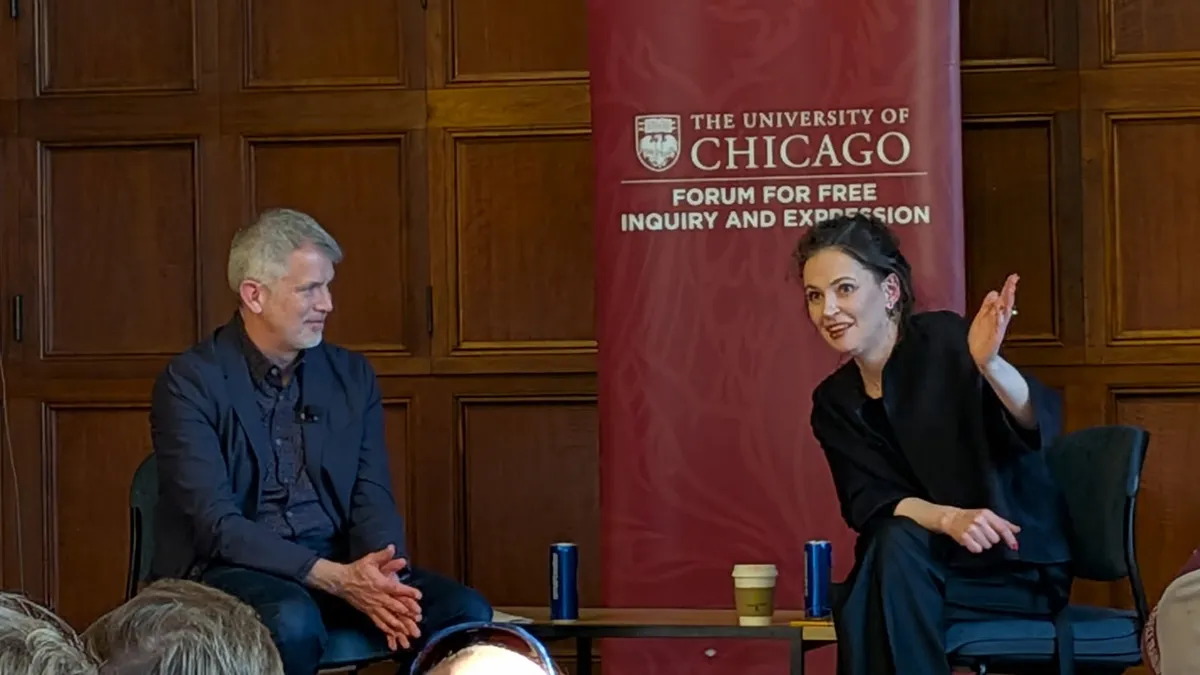
1 And co-hosted by the Malyi Center for the Study of Institutional and Legal Integrity—another Tom Ginsburg production—as well as our Center for East European, Russian, and Eurasian Studies. ↩