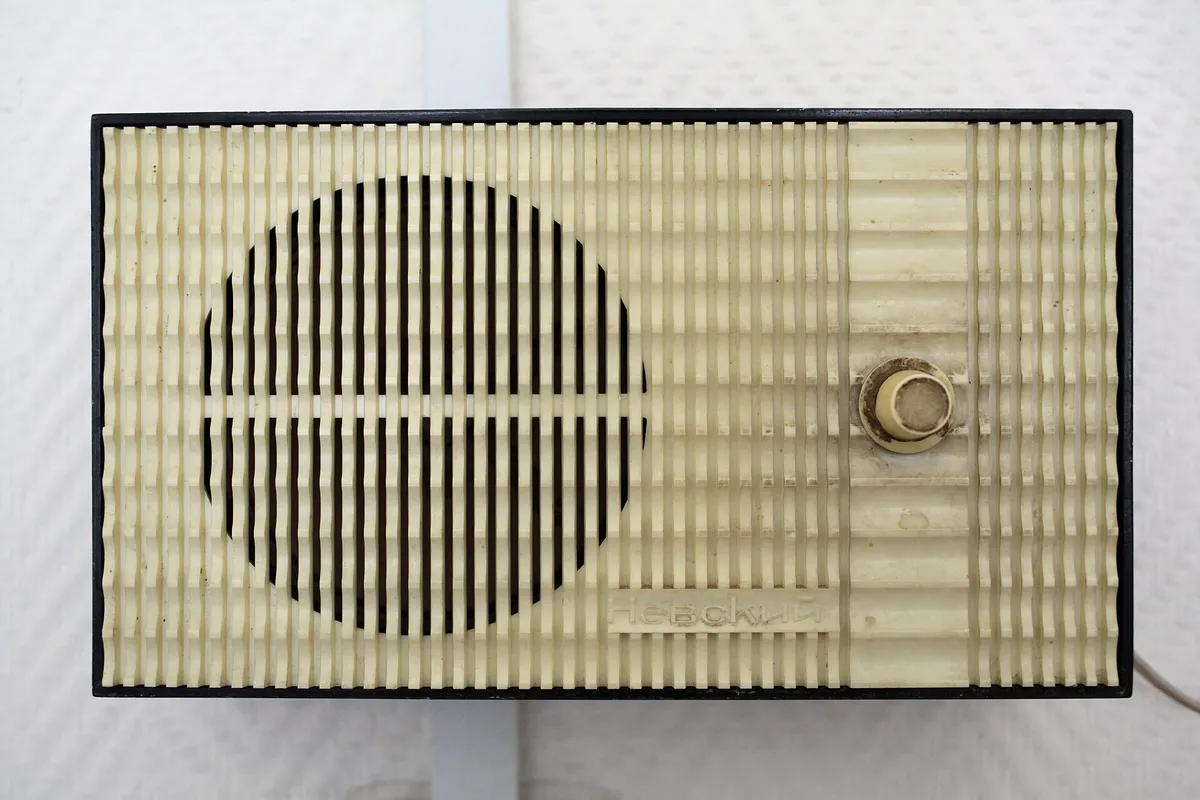
Radio and Repression in Stalin’s Soviet Union
That is the subtitle of a new working paper by Sultan Mehmood, Yaroslav Prokhorskoy, and Hans-Joachim Voth. Here is the abstract:
Mass media often persuades; it can also expand the machinery of repression. We study radio network expansion and political persecution in Stalin’s Soviet Union, in the decades leading up to the ‘Great Terror’ of 1937-38. Greater radio coverage systematically intensified political repression: a one-standard-deviation increase in signal strength is associated with roughly 40 percent more arrests and a 20 percent rise in the execution share among those arrested, with effects that grew over time. For identification, we exploit newly digitized county-level panel data for 1920–1940 and variation in longwave radio signal strength driven by ground-conductivity differences along propagation paths. Additional repression was disproportionately misdirected. Post-Stalin rehabilitation records show that high-signal areas produced substantially more sentences later reversed. Within the security apparatus itself, stronger radio reception reduced recruitment into the NKVD. It also increased the probability that incumbent officers were purged or demoted, consistent with tighter monitoring and escalating internal risk. Mass communication was not only persuasive; it operated as an input into coercive state capacity by lowering the coordination and monitoring costs of repression.
Some thoughts:
- When Konstantin Sonin and I wrote our paper on "Government Control of the Media," we wrestled with how to model the consumption of multiple media signals. If our motivation had been Soviet propaganda, we could have worried less. Especially during the period that Mehmood, Prokhorskoy, and Voth examine, most households would have had access to a single radio station, delivered over wired radio.
- The research design is different from that in the typical media paper. Rather than exploiting the quasi-random transmission of radio signals as they bounce off hills and the like, the authors exploit idiosyncratic variation in ground-wave transmission of the longwave signals that carried broadcasts to local wired distributors. I wonder about other settings where one could use this design: Colonial empires? USDA radio? One would need to think about the local geology and what would be necessary to argue excludability.
- Radio broadcasts also traveled by medium-wave signals, which apparently bounce off the ionosphere at night. Rather than worry too much about whether this might break identification, one can lean on a particular institutional detail: Regular broadcasting during this period took place primarily during the daytime, in part because Soviet wired radio sets did not have volume controls; many households, especially those in communal apartments, simply turned off the loudspeaker at night.
- The theoretical literature on information manipulation in autocracies generally assumes that persuasion and repression are substitutes. (One exception is my paper with Zhaotian Luo, Anton Shirikov, and Dmitriy Vorobyev asking, "Is There Really a Dictator's Dilemma?" Persuasion in our model takes the form of electoral manipulation, not media control, but the argument likely generalizes.) This seems like an important example of complementarity.
- That said, it doesn't seem like local agents of the NKVD liked being hemmed in by conspiracy theories propagated over the groundwaves. As noted, recruitment into the NKVD was harder, not easier, where radio signals were idiosyncratically stronger.
- There were more subsequent rehabilitations where radio signals were stronger, suggesting more overfulfillment of the plan. But I'm not sure that implies that those who were rehabilitated were any less "guilty" than those who were not. (In fairness, the paper also puts "guilt" in scare quotes.)