Not Actually Roasting Henry Brady
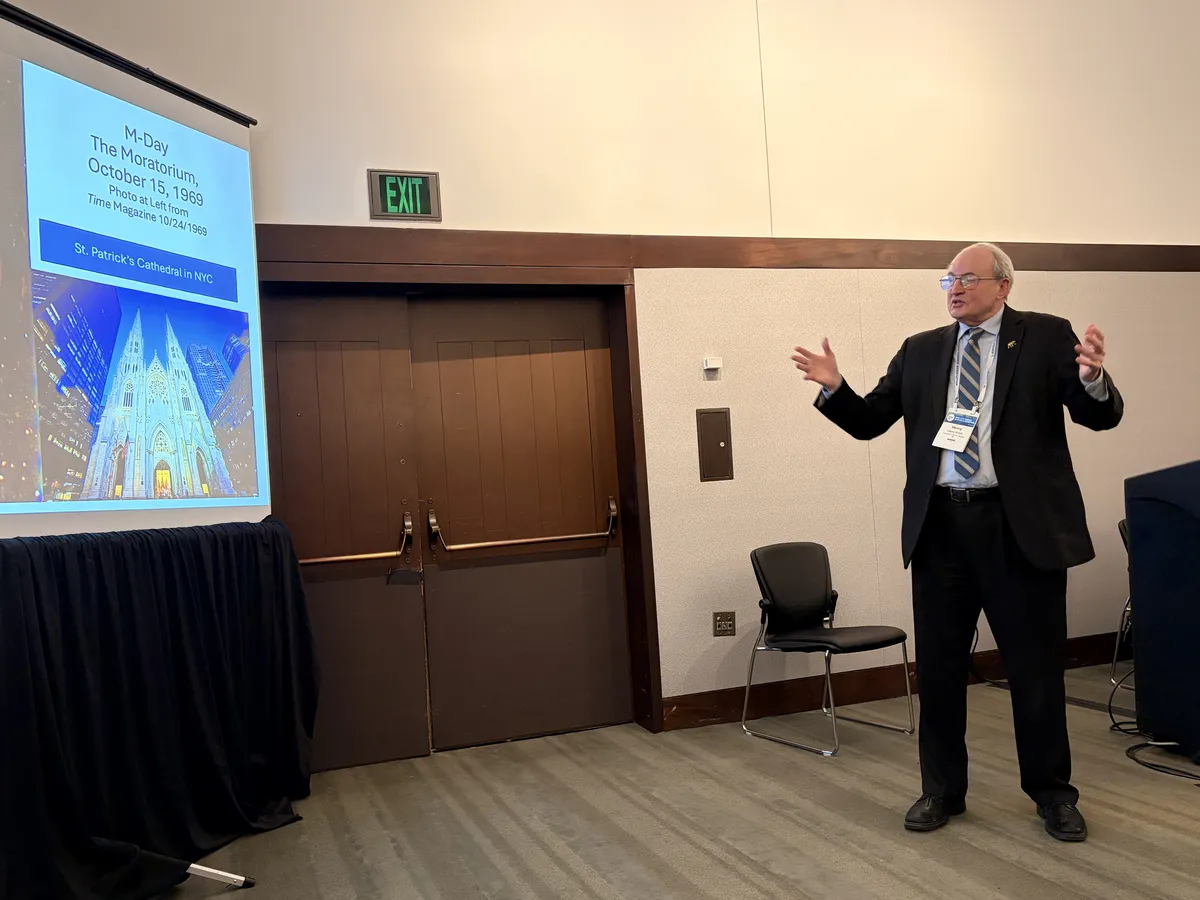 It was a thrill to join other colleagues and students of Henry Brady yesterday for the panel "Remembrances, Rants, Roasts: Henry Brady’s Contributions to Political Science." My remarks:
I did not know Henry Brady from Adam when I applied to Berkeley—or even, I believe, when I showed up.
Moreover, I did not get to know Henry in the usual manner, chanting alongside other first-year students, as I learned my econometrics in the Econ Department. No, I came to know Henry when I took his class on conceptualization and measurement with David Collier—a great course, and a study in contrasts. Henry and David were temperamental opposites, but intellectually they were natural complements, as their subsequent work would show.
Ultimately, two things made me Henry’s student: Henry did in graduate school what I wanted to do, which was to study economics alongside political science; and he was working—is still working—with Cynthia Kaplan on political behavior in the late Soviet Union, which matched my own regional focus. Expressed in terms that Henry would appreciate, there was none of the projection or rationalization that sometimes accompanies the choice of advisor. Unbeknownst to me when I decided to attend Berkeley, Henry Brady was the most proximate of all possible mentors.
I spent the summer after my second year in graduate school working for Henry on his project with Cynthia. I learned a lot from that experience, not all of it about Baltic protesters and the Ukrainian independence movement.
Most importantly, I think I learned to be kind to the people who work for me. I don’t mean specifically that Henry was kind to me, though he was that. I mean that Henry’s kindness was evident in the conversations I would view from the side, as one person or another at the Survey Research Center—Henry had just taken over as director—wandered into his office as we were meeting. And I don’t mean just SRC, or even just the people who worked with Henry in some formal capacity. I mean the street sweeper who worked for all the taxpayers of Berkeley, whom Henry made of point of thanking as we passed by on our way to lunch. I remember vividly that act of kindness.
Something else I learned from Henry is what it means to be at the research frontier. It means not sinking into one’s own world but constantly looking at every other planet in the system. I have often repeated to students a little gem I remember from my time in graduate school. There are two types of scholars, Henry told me: those who are happy doing what they do, and those who live in mortal fear of missing the next big thing. Henry has lived his academic life in that happy mortal fear. If he’s not having lunch with a student or a colleague, he’s having it with a book.
One thing I did not learn from Henry, I’m afraid, is to wear a tie. I had done that before graduate school, and I didn’t really want to do it again. I remember once we were presenting something together at MPSA. Henry looked at me in the bathroom mirror before the panel and said, I hope you have a tie. In that particular case I did, though it was waiting in my jacket pocket. I don’t think I have worn one many times since.
Henry chaired my dissertation committee, which was no mean feat, as I was in Moscow for nearly all of my time dissertating. I did come back for APSA the year I was on the job market. John Sides was also on the market that year, and Henry walked us around the convention center like he was a brand manager for Procter & Gamble and we were two boxes of soap. I remember bumping into Larry Bartels in the hallway. Henry says, “Larry, hire these guys! They will raise the IQ of your department.” Larry looks us up and down and says, “Average...or total?” Sigh…Anyway, that is one more thing I learned from Henry, which is the value of bringing students into your nework.
I could go on about the many things I have learned from Henry Brady, from the sacred (what it means for the spatial model to be the brand of political science) to the profane (what it means to Neal Beck the grill). But time is short, so let me close with this: Dissertation advisors are a little like parents. (Several of us here are academic siblings.) Parents send you into the world, but even after you leave, a part of you still wants to please them. When I think of pleasing Henry, I think I know what would make him most happy. It's being kind, it's being perpetually curious, it's supporting one's students, it's following his example. Thank you, Henry, for being who you are.