A Field Research Trip in Human Rights Violations
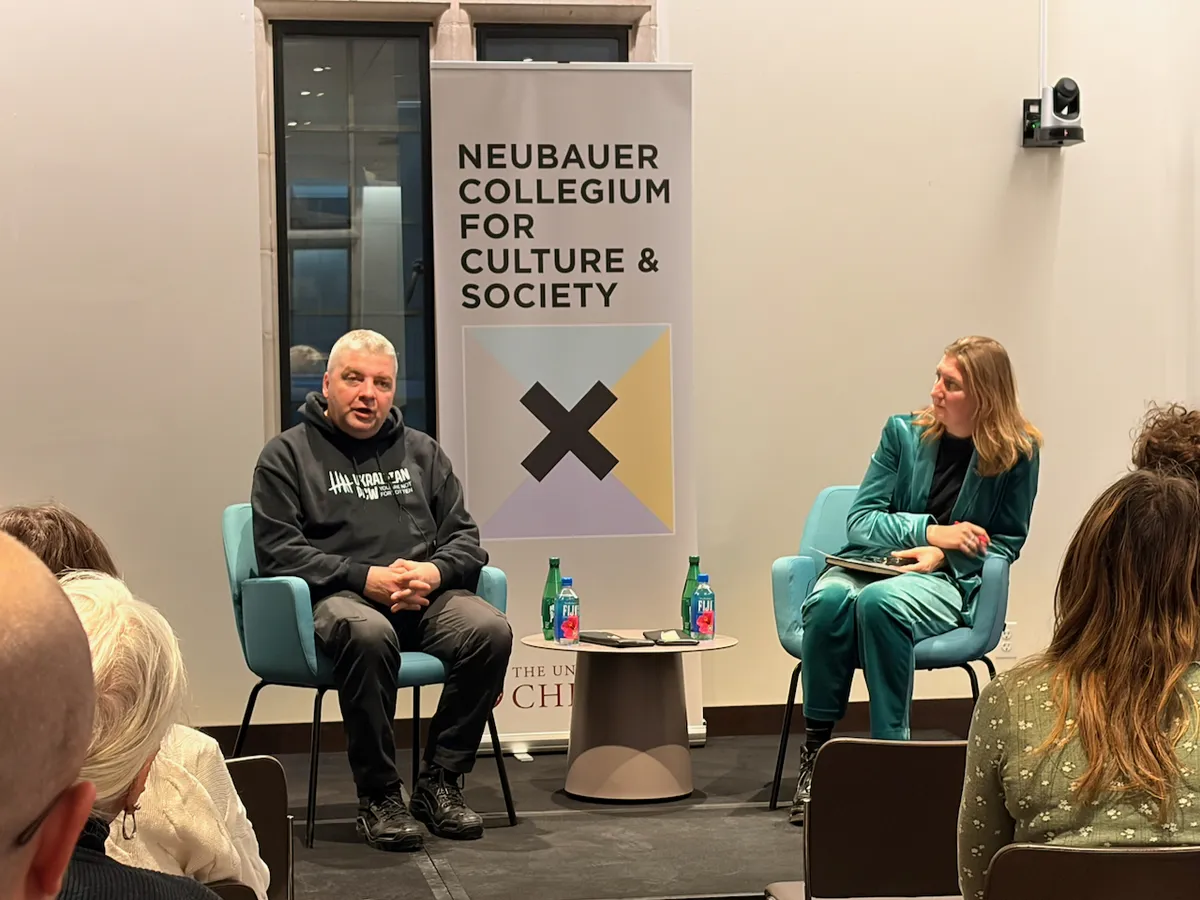
Maksym Butkevych— journalist, human rights activist, and winner of the 2025 Václav Havel Prize given by PACE—was on campus yesterday for a talk at the Neubauer Collegium. Maksym spent two years in Russian captivity in Luhansk. It was, he said, a “field research trip in human rights violations.”
I asked Maksym what he had learned from his experience that helped him understand how one person can perpetrate abuses against another. His response:
- A handful of his captors were sadists. Not most, but some. These men took physical pleasure in torturing prisoners.
- The guards in Luhansk were locals, whereas his interrogators were Russian. For the locals, Ukrainians were simply the enemy they had fought for the past decade. The Russians, in contrast, viewed their work as a job.
- Some of the interrogators were…not quite humane, but reasonable. And yet Maksym knew that, if given the order, they would break him.
- The Russians held the fatalistic belief that nothing they did could change anything. They simply could not understand why Ukrainians had protested against the Yanukovych regime. This made it easier for them to do their job.
- For the interrogators, building a successful criminal case meant career advancement.
- The Russians were consumers of state propaganda, which is crude but surprisingly effective. It simply makes no sense to say that Ukraine is ruled by gays and Nazis, yet Maksym heard these words from his interrogators as if straight from the television set. He grew to understand that propaganda provides a comforting narrative for those who consume it.